Sigmoidoscopy
Sigmoidoscopy is a procedure that uses a flexible tube with a camera to examine the lower part of the colon (sigmoid colon and rectum). It helps detect inflammation, polyps, bleeding, and other abnormalities, aiding in diagnosis and screening for colorectal diseases.
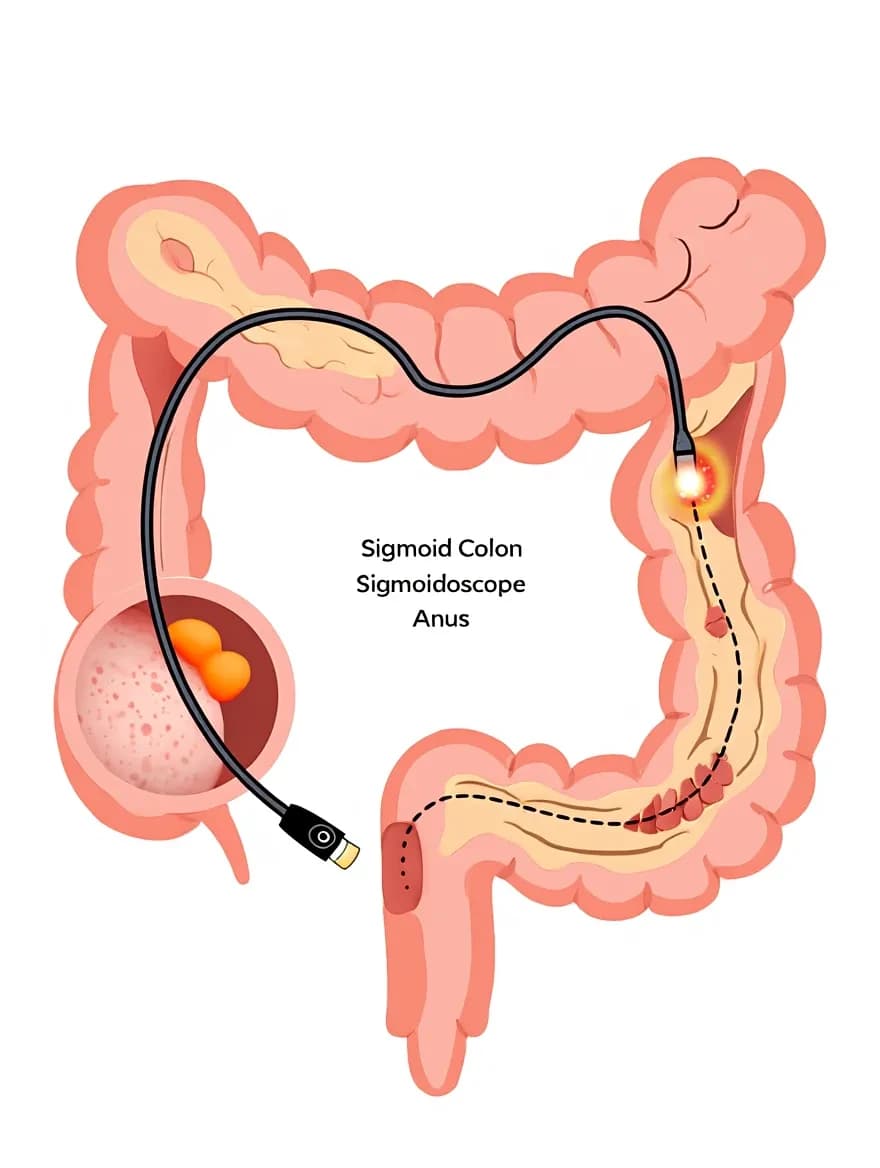
Sigmoidoscopy is a diagnostic medical procedure used to examine the lower part of the large intestine, specifically the sigmoid colon and rectum, using a flexible, thin tube called a sigmoidoscope equipped with a light and camera.
Purpose:
This procedure helps doctors investigate symptoms such as:
Rectal bleeding
Chronic diarrhea or constipation
Abdominal pain
Unexplained changes in bowel habits
Screening for colorectal cancer or precancerous polyps
Procedure:
During sigmoidoscopy:
The patient typically lies on their side.
The doctor gently inserts the sigmoidoscope through the anus into the lower colon.
The camera transmits live images to a monitor, allowing detailed visualization of the mucosal lining.
If necessary, small biopsies (tissue samples) can be taken for lab analysis.
Polyps or abnormal growths can sometimes be removed during the exam.
Advantages:
Less invasive and shorter than a full colonoscopy.
Usually requires minimal or no sedation.
Quick procedure, often completed within 10–20 minutes.
Effective for detecting diseases limited to the distal colon and rectum.
Limitations:
Only examines the lower colon, so abnormalities in the upper colon or entire large bowel may be missed.
May require a full colonoscopy if further investigation is needed.
Aftercare:
Patients may experience mild cramping or gas after the procedure. Normal diet and activities can usually be resumed soon after.
When to Choose Sigmoidoscopy?
It's commonly recommended for:
Initial colorectal cancer screening in some settings.
Evaluating rectal bleeding or lower bowel symptoms.
Follow-up for known distal colon diseases.