Polypectomy
Polypectomy is a medical procedure to remove polyps—abnormal tissue growths—from inside the body, usually from the colon or stomach, using a special tool during an endoscopy or colonoscopy. It helps prevent polyps from becoming cancerous.
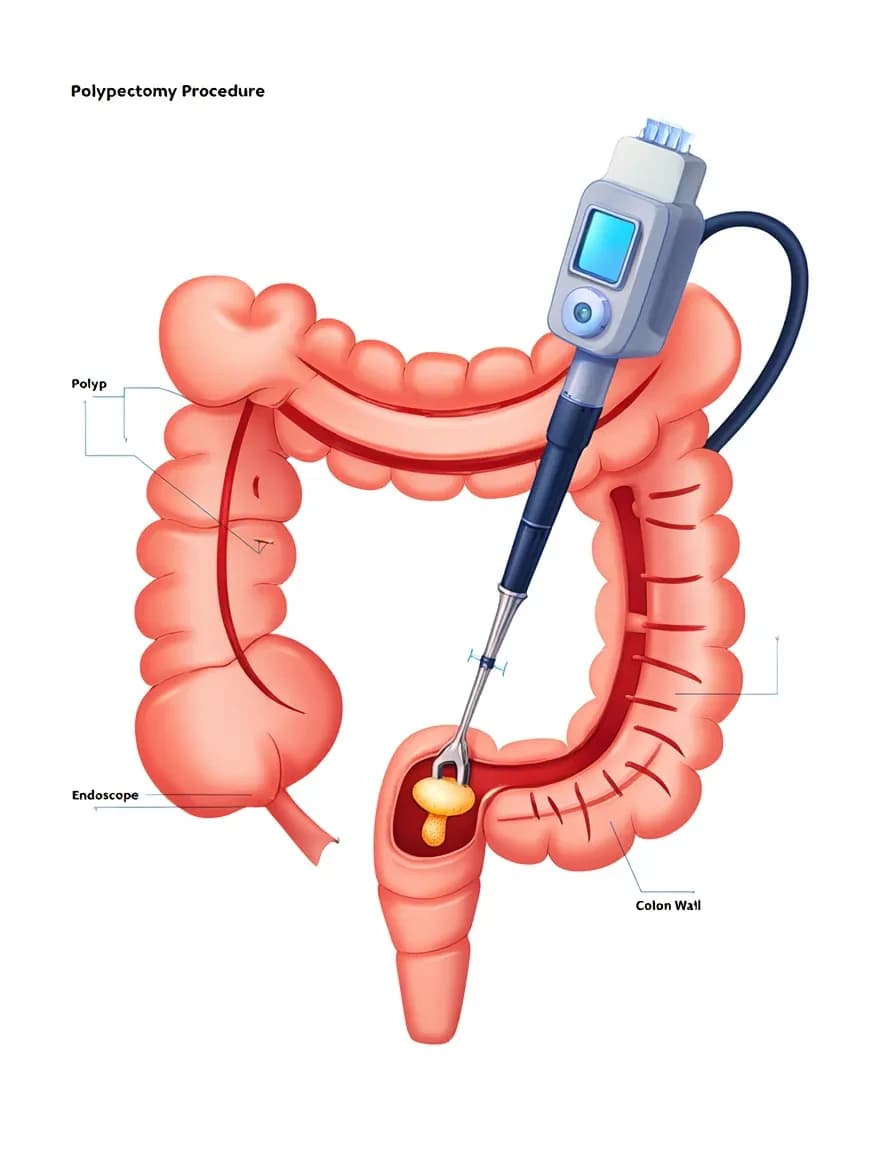
Polypectomy is a medical procedure used to remove polyps — abnormal, usually benign growths of tissue — from the mucous membrane lining of various organs, most commonly the colon, stomach, nasal passages, or uterus. Polyps can vary widely in size and shape, ranging from tiny, flat lesions to large, stalk-like structures. While many polyps are harmless, some have the potential to become precancerous or cancerous, making their detection and removal important for disease prevention.
Purpose and Importance
Polypectomy primarily serves two purposes:
Diagnostic: Removing polyps allows for microscopic examination (biopsy) to determine whether the tissue is benign, precancerous, or malignant (cancerous).
Therapeutic: Removing polyps reduces the risk of progression to cancer, particularly in the colon where colorectal cancer often develops from polyps over time.
When and How It Is Performed
Polypectomy is most commonly performed during endoscopic procedures such as:
Colonoscopy: For polyps in the large intestine (colon).
Gastroscopy (Upper Endoscopy): For polyps in the stomach or upper digestive tract.
Nasal endoscopy: For polyps in the nasal passages.
Hysteroscopy: For uterine polyps.
During these procedures, a flexible tube with a camera (endoscope) is inserted through a natural opening (mouth, anus, or nose), allowing the physician to see inside the organ and locate the polyps.
Using specialized instruments passed through the endoscope, the doctor removes the polyp by one of the following techniques:
Snare polypectomy: A wire loop (snare) is placed around the base of the polyp and tightened to cut it off, sometimes using electric current (electrocautery) to minimize bleeding.
Cold biopsy: Small polyps may be removed by simple cutting without heat.
Forceps removal: Small polyps can sometimes be grasped and pulled off.
Procedure Details
Preparation: Patients usually undergo bowel preparation (for colonoscopy) or fasting (for upper endoscopy).
Anesthesia: Usually mild sedation or local anesthesia to ensure comfort.
Duration: Polypectomy adds a few minutes to the endoscopy, which overall takes 15 to 60 minutes depending on the case.
Recovery: Typically outpatient; patients recover quickly and may resume normal activities within a day.
Risks and Complications
While generally safe, polypectomy can have rare complications such as:
Bleeding, which may occur immediately or days later.
Perforation (a small tear) of the organ wall.
Infection.
Adverse reaction to sedation.
Most complications are manageable with prompt medical care.
Aftercare and Follow-Up
Removed polyps are sent to pathology for detailed examination.
Follow-up screenings depend on polyp type, size, number, and patient risk factors.
Patients with certain types of polyps may need more frequent colonoscopies or endoscopies.
Summary
Polypectomy is a crucial, minimally invasive procedure that helps detect and prevent cancer by removing abnormal tissue growths called polyps. It is commonly performed during endoscopic exams and is a key tool in gastrointestinal and other organ health management.